01
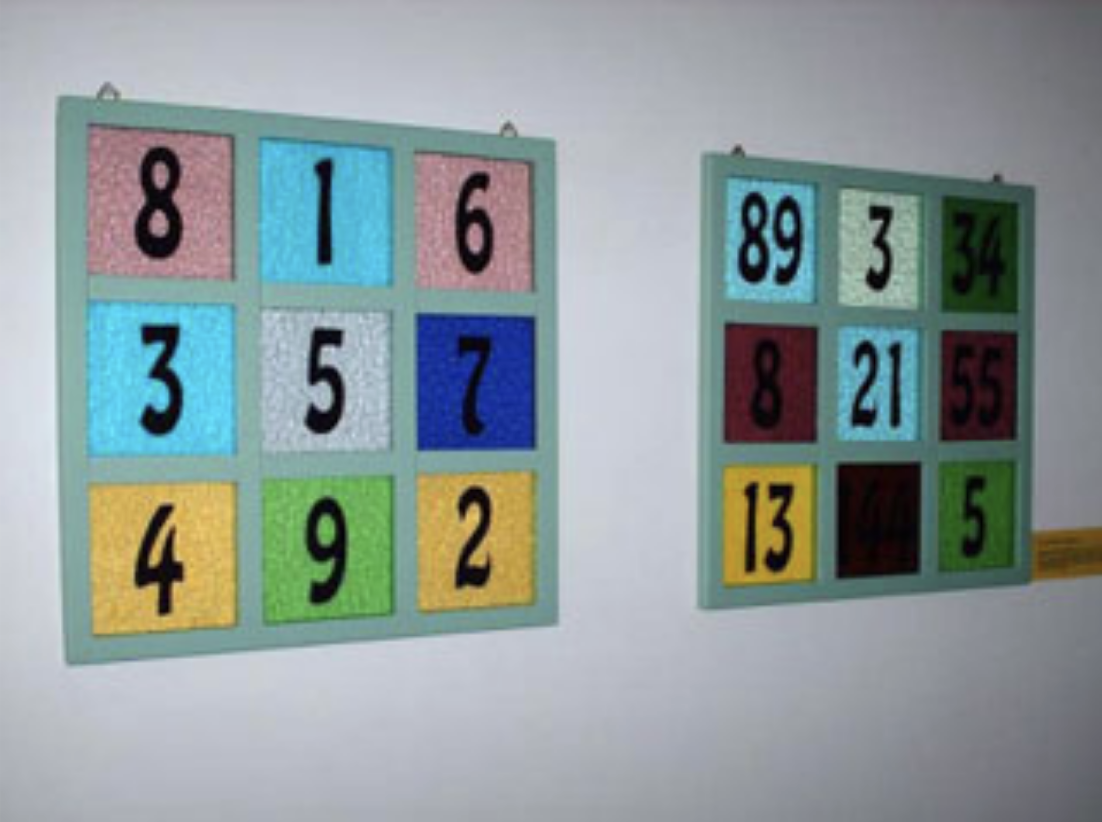
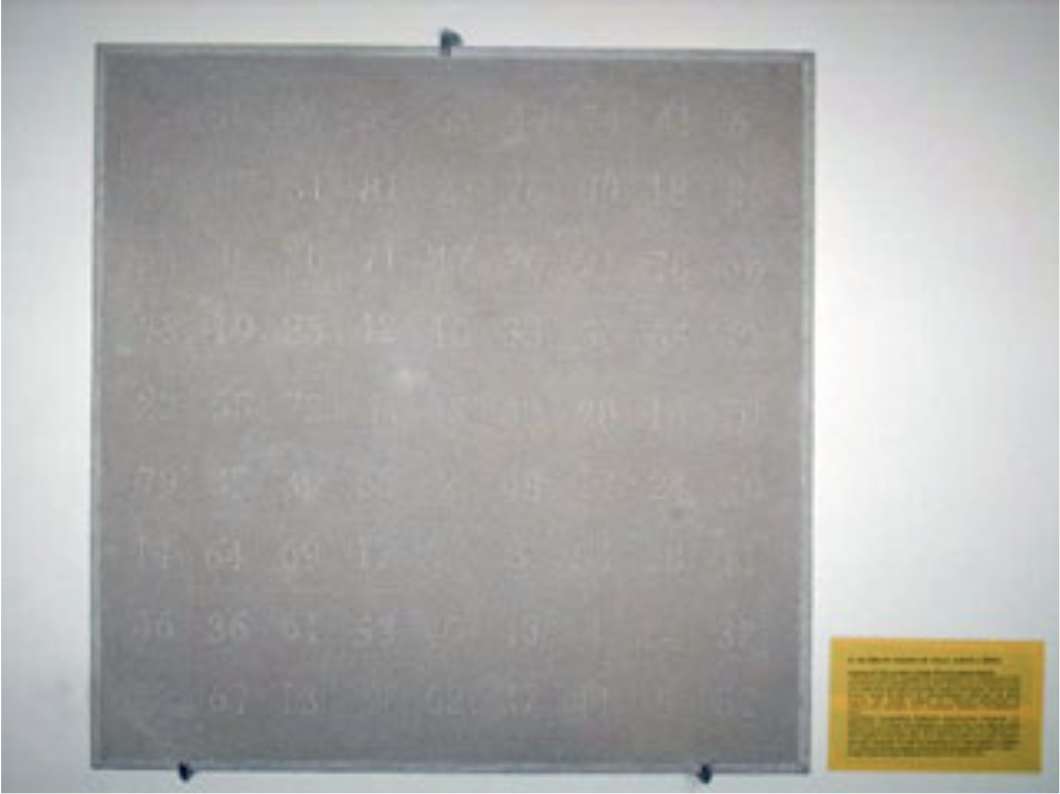
MAGIC LATE SQUARE THREE (iron)
The first nine numbers can be arranged in QM in one way, but can be repeated in eight varieties that differ only for the rotation of numbers of 90°, 180° or 270° clockwise.
HIGHLIGHTS
Mateureka, the Mateureka, Museum of Mathematics and Calculation of Pennabilli presents the history, tools, ideas and concepts of one of the most fascinating adventures of human thought: the mathematics.
From the difficulty and uniqueness of the proposal, Mateureka is not configurable as a traditional museum that merely exposes “pieces” or “objects”, although interesting.
It must attract, invoke to make the visitor reason especially through doing, experiment it, through the activities of laboratory; to value, as much as possible, the ludic and interactive aspect.
At the permanent exhibition of the basic ideas of mathematics and the most significant instruments of the calculation that occupy four floors of the most prestigious palace of Pennabilli, adjacent to the vegetable garden of the forgotten fruits of the poet Tonino Guerra, one must necessarily support an activity, also outside the Museum, of temporary exhibitions, meetings, debates, deepenings, etc., which become fundamental not only for the Museum but for the whole territory.
Through these cultural activities the Museum, slowly, becomes one of the primary engines of creation and diffusion of culture that contribute to make Pennabilli one of the most interesting, living, meaningful and propositive art cities of central Italy.
Without this cultural “gymnastic” the Museum would soon become like an athlete who does not train: first asphyptic, then ankylosed and finally useless.
The ability to make these projects is therefore “vital” for the Museum.
The exhibition on the magic squares, inaugurated on July 15 at the Mateureka Museum in Pennabilli, is a background and a contour to an important fact for the Museum: the exhibition of the greatest magic square in the world, entered the Guinness of primates, the famous "magic square of vampires" by Adriano Graziotti.
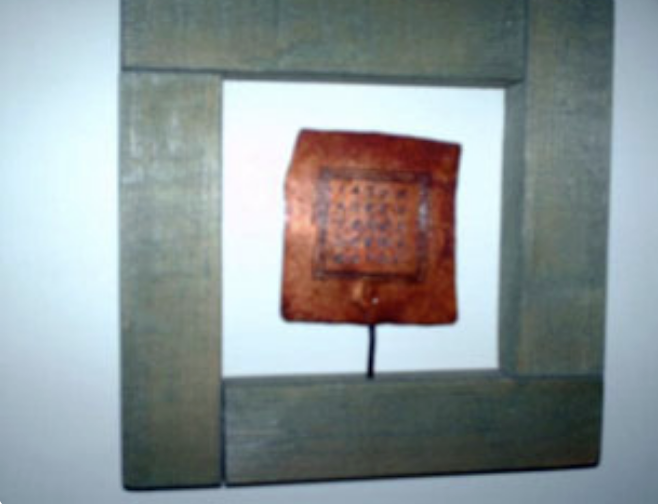
Magic squares have fascinated mathematicians, and people, for centuries. From ancient times they were connected with the supernatural and magic. The oldest news about a magic square comes from China and goes back to 2200 BCE (see photo Lo-Shu).
The exhibition, in addition to explaining the mathematical rules that underwent this particular “numerical rack” where the sum along each row, column or diagonal always gives the same result, presents different, remarkable and famous squares: the Melancolia engraving of the German painter Durer (1471-1528) that brings back the magic square used as amulet to keep the plague away (see photo Mensula Jovis); the famous Sator,
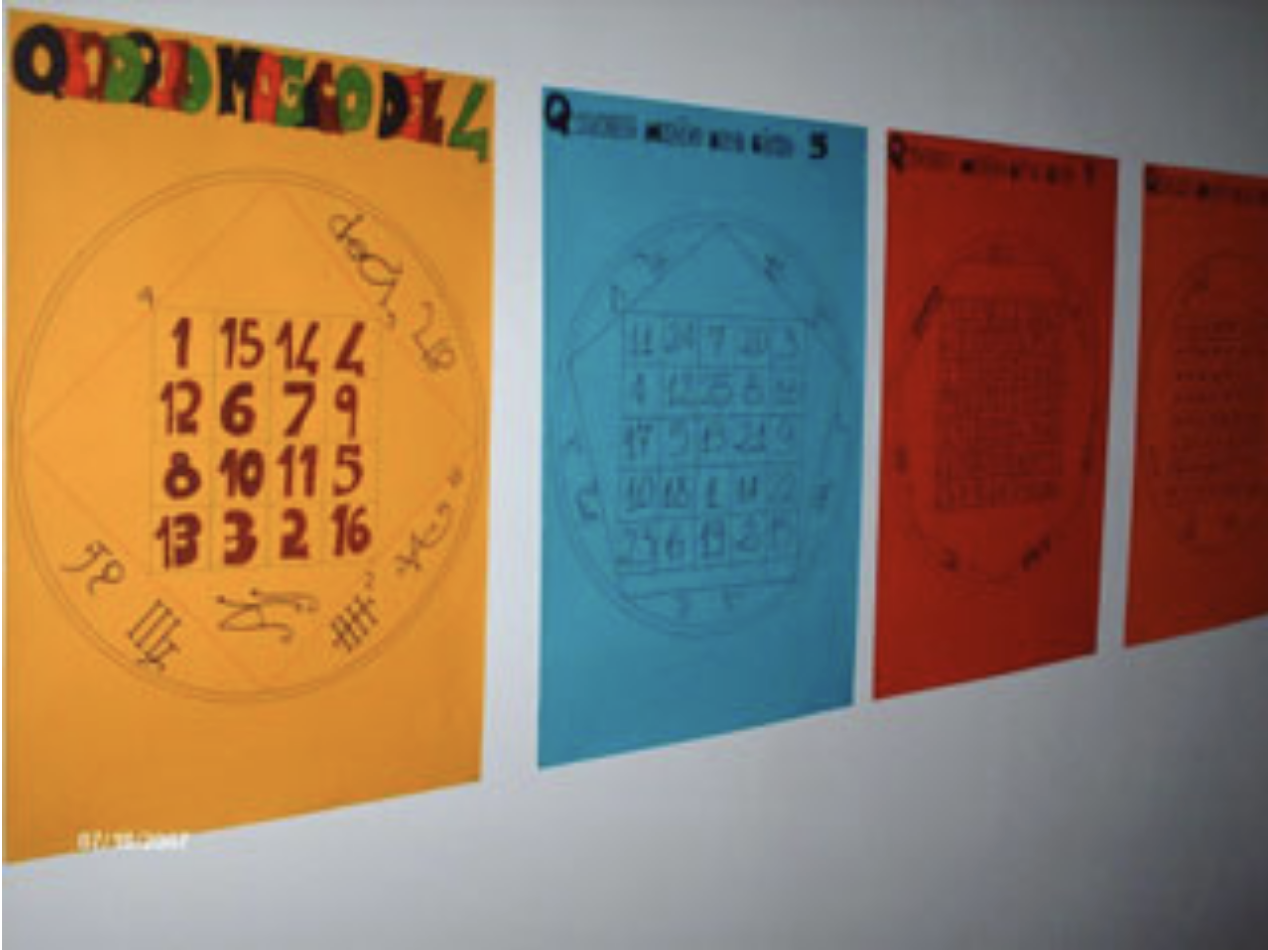
An exhibition, that on the magic squares, which has relevance with sectors certainly not trivial of mathematics as the theory of groups, latin squares, determinants, partitions, matrices and congruence relationships in arithmetic and is located in an ancient and at the same time modern research line, which combines clarity and mystery, science and poetry.
In particular, the following magic squares are presented in stone, wood, iron, brick, glass and porcelain:
The first nine numbers can be arranged in QM in one way, but can be repeated in eight varieties that differ only for the rotation of numbers of 90°, 180° or 270° clockwise.
The smallest order QM 3 with only first numbers.
By combining the numbers of Fibonacci 3, 5, 8, 13, 21, 34, 55, 89, 144 (every term is the sum of the two preceding) to the first 9 natural numbers a square is formed (not quite magical) in which the sum of the products of the three lines (9078+9240+9360=27678) is equal to the sum of the products of the three columns (9256+9072+9350=27678).
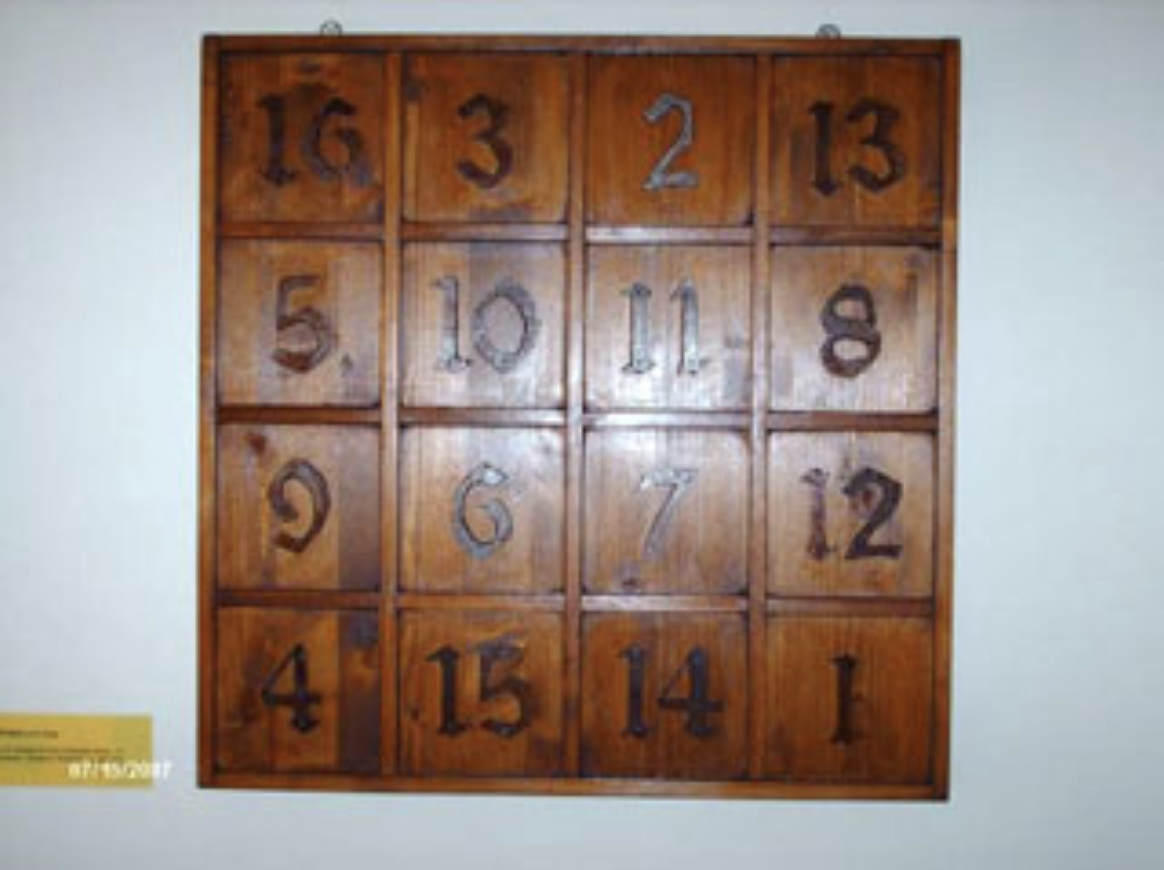
Returns the order QM 4 with constant 34, symbol of Jupiter (Mensula Jovis).. “And if someone will bring him, if he is unlucky he will become lucky, if he is already lucky he will become even more.”
We placed the domino pieces in order to obtain a QM 7x7, with a constant equal to 24 (with a lateral column of empty spaces).
Composed in 1768, order 9, constant 369 with the following epigraph:
VALE.”
Caetanus Gilardonus Romanus Philotecnus Inventor A.D. MDCCLXI. ” (O reader, dotto admirer or profane that you are, know that this square built according to the rules of the Annex from 1 up to 81 includes 3321 units; any column of the same, both horizontally and vertically and transversely, includes 369 units multiplied by 9 give precisely the same 3321 units and is called maximum since it possesses the maximum extension. Hello.
Gaetano Gilardone Roman philosopher-inventor year Domini 1766).

It is the largest existing QM, which entered the Guinness of the 1998 primates. This “panquadrate” (some QM inside a QM) is a singular work in which the mathematical rigour merges with abstract art and is divided into 64 chess per side for a total of 4096 boxes; the author used all natural numbers from 1 to 4096 none excluded. The constant is 131.104.
The artist thought to include in his square something like 18 symmetric figures compared to the center – cross, vampires, ears, labyrinths, semi-diagonals – whose numerical boxes replicate all the prefixed constant 131.104. Theoretical drawing, incredible and beautiful that only the mind of an artist who warned the mathematics as a place and subject of his own achievements could figure out.