FRACTALS
Floor 4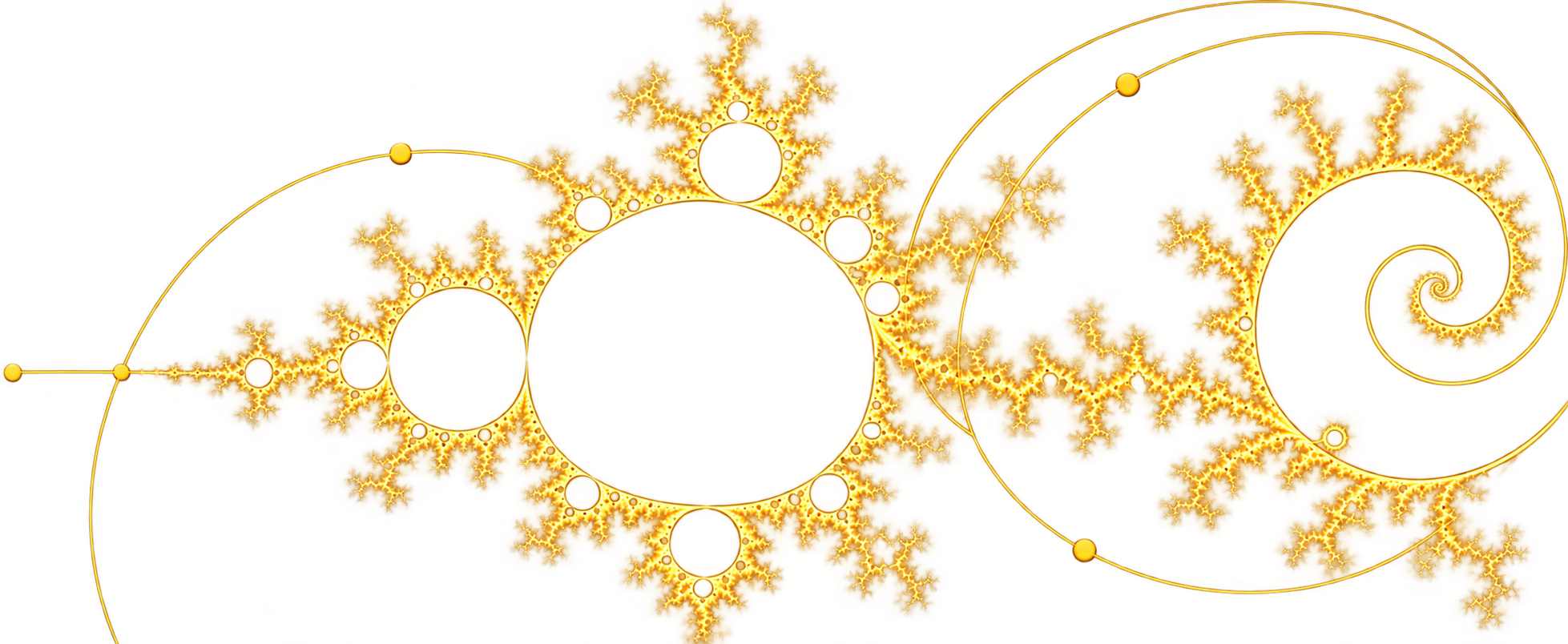
“The geometry fractal describes natural forms and configurations more succinctly and aesthetically more valid than traditional euclidea geometry”
In the classic geometry the curves have a size, the two surfaces and the solids are three-dimensional. But there are “pathological” curves, studied from 1875 to 1925 by Weierstrass, Sierpinski, Koch, Peano and others, which have a fractional dimension and self-similarity as a basic characteristic; if you examine these objects at different scales you always meet the same fundamental elements.
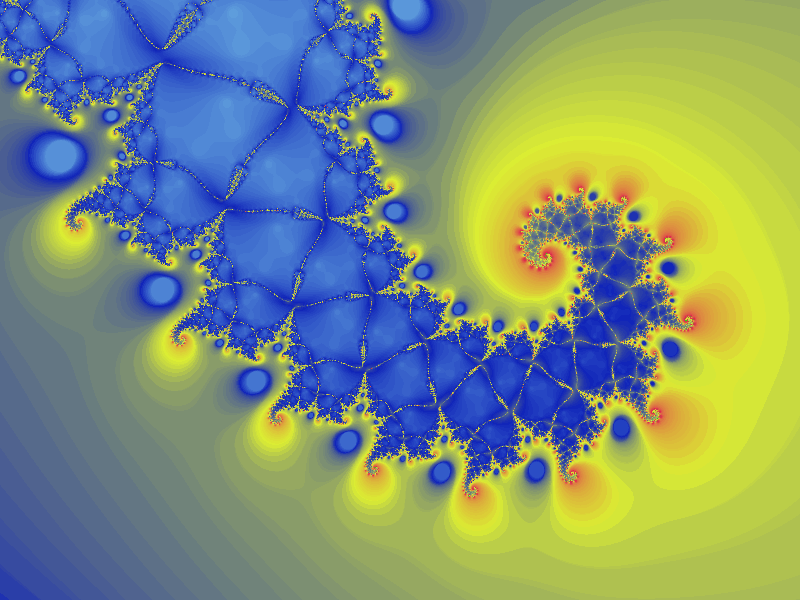
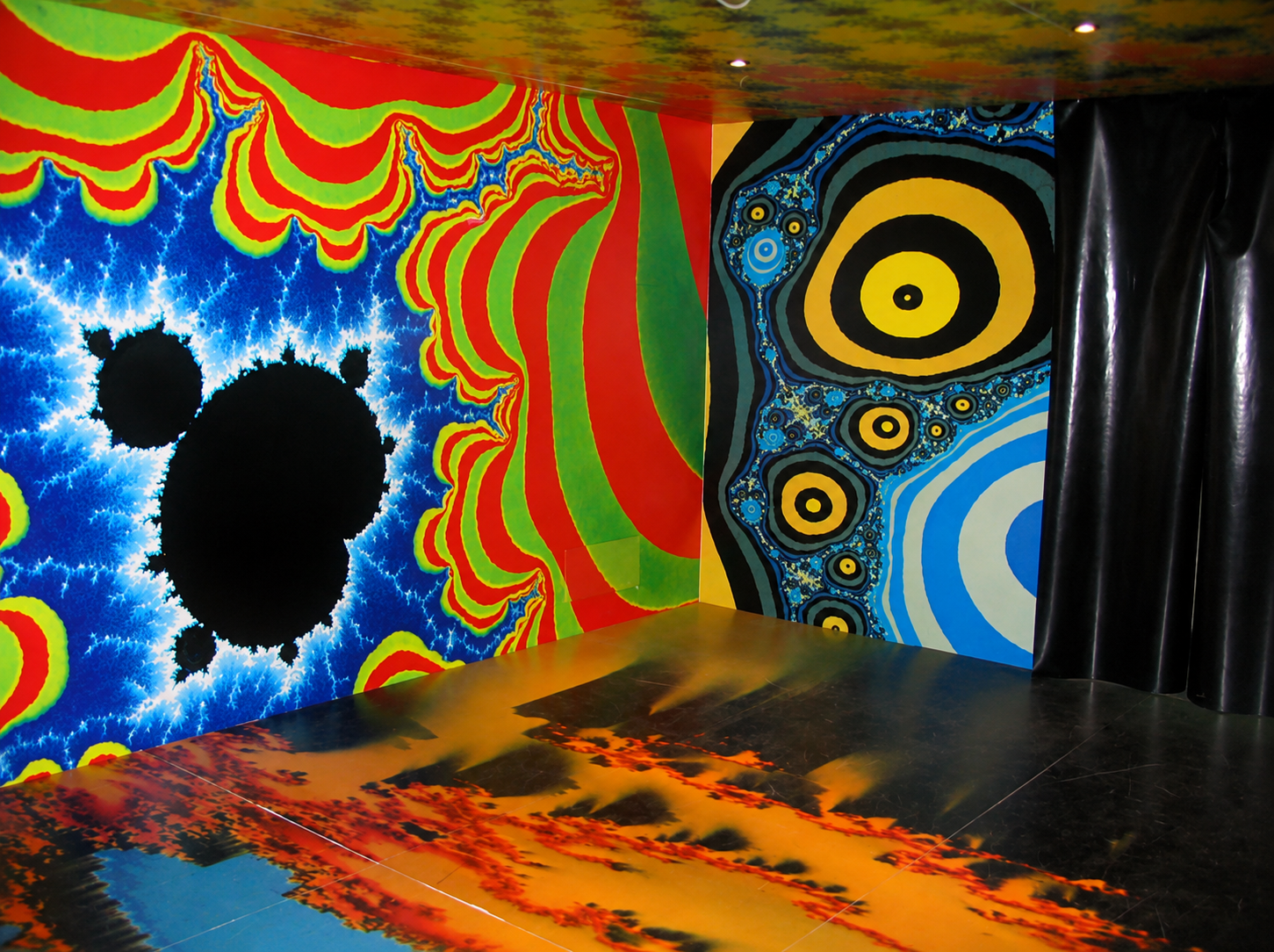
These figures were called fractals by Mandelbrot in 1977. After exploring the self-similar “natural” fractals, Mandelbrot discovered the iterative procedures that were used to produce abstract mathematical buildings, such as the famous sets of Mandelbrot and Julia. Like the other fractals, these sets had been discovered long before the Mandelbrot era, but they were so complex that it would have been impossible to view them and study them without the use of the computer.
Computers have broken the doors to a new research area, that of dynamics of complex systems (fluids, atmosphere, growth of plants, behaviour of animal groups, socio-economic trends, etc.), with the advantage of showing everyone on the screen the intrinsic beauty of structures.
If there is an area of the mathematics “daughter” of the computer age, this is precisely the theory of fractals, also called Nature geometry because these strange and chaotic forms describe natural phenomena such as earthquakes, trees, barks, roots, clouds, coastlines, mountains, rivers, snowflakes, crystalline and molecular structures, the motion of galaxies and much more.