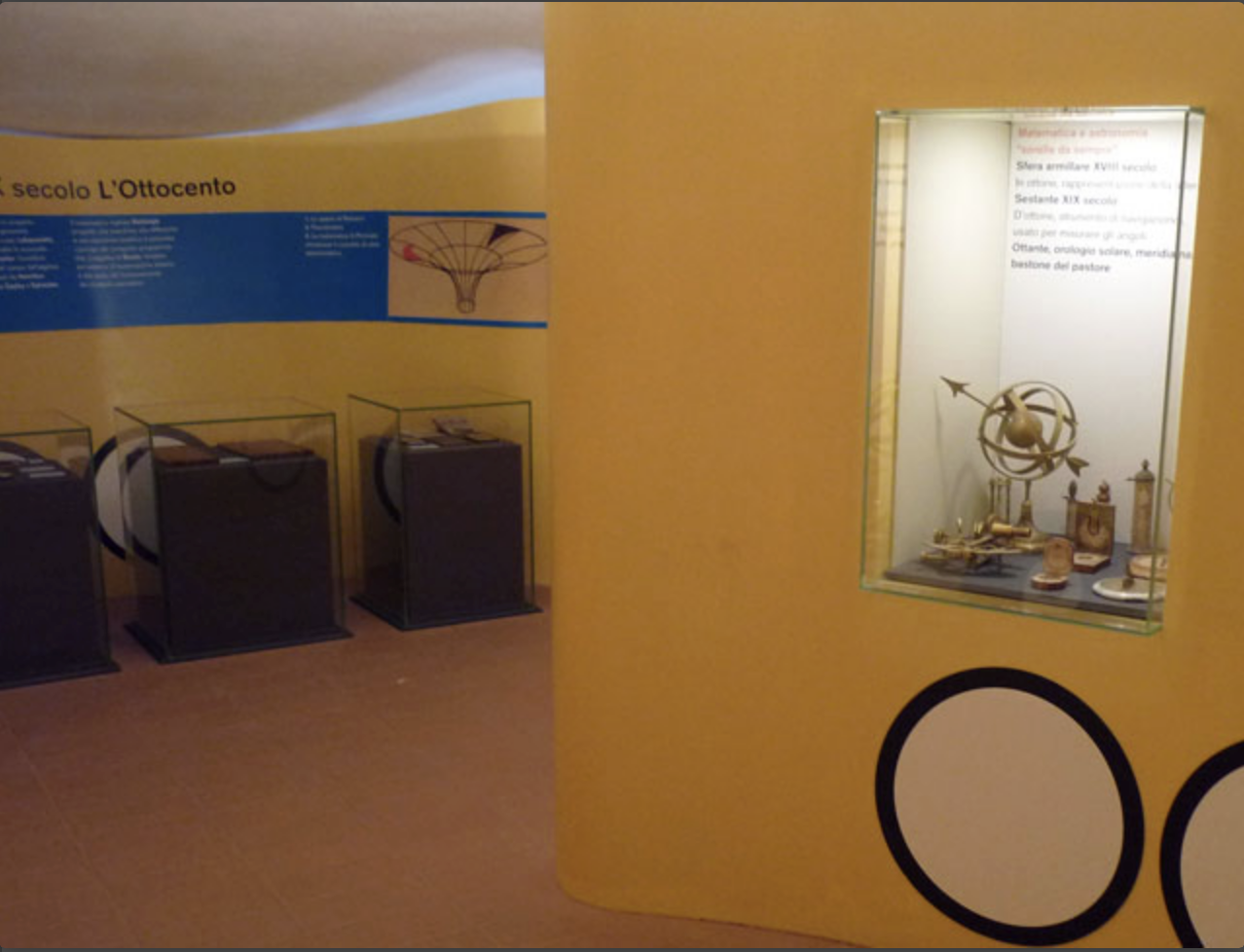
THE NINETEENTH CENTURY (19th Century)
Floor 1The XIX century is the Golden Age of Mature. With Gauss a true Renaissance begins; with Bolzano, Cauchy and Abel there is a “return to rigour”, new mathematical entities and concepts are introduced: group theory, topology, functional spaces, etc.
A general concept that will be defined in the 20th century, that of structure at the basis of a theory.
It took the entire 19th century to get rid of the traditional conception of mathematics – natural numbers for arithmetic, equations for algebra, space and figures for geometry, functions for mathematical analysis – and arrive at the modern concept in which the importance is entirely attributed to the Reports between institutions.
A new world was discovered in the field of geometry by Russian mathematical Lobacevsky; the field of mathematical analysis was shocked by German Cantor.
Revolutionary contributions in the field of algebra were made by Hamilton and Boole and from Cayley and Sylvester.
English mathematician Babbage He designed a Difference Engine and an Analytical Engine and ran the principles of programmable computer.
The algebra of Boole, founded on the binary numberal system, is the basis of the operation of modern computers.